
Paid media judged on profit, not reach.
Paid advertising is the fastest way to learn what your market responds to and the fastest way to waste money learning it. The difference between the two is almost never the platform. It is whether the account is structured around your actual economics, whether the landing experience matches the promise in the ad, and whether anyone is honest about which conversions were real.
- 1 metric
- Cost per qualified acquisition
- Weekly
- Optimisation and creative review
- Full funnel
- Search, social, remarketing, retention
Brands we work with
Teams we run performance ads and more for.
In short
We run Google, Meta, LinkedIn and programmatic campaigns as one media system, with a single number at the top of the report: what it costs to acquire a customer worth having, and whether that number is going in the right direction.
02
Work we are happy to put our name on.
A small, real portfolio rather than a wall of borrowed logos. Websites, short form video and campaign design produced for clients who are still running the work today.
Fast, search ready websites built to be handed over in full, with the hosting, the analytics and the code in your name.
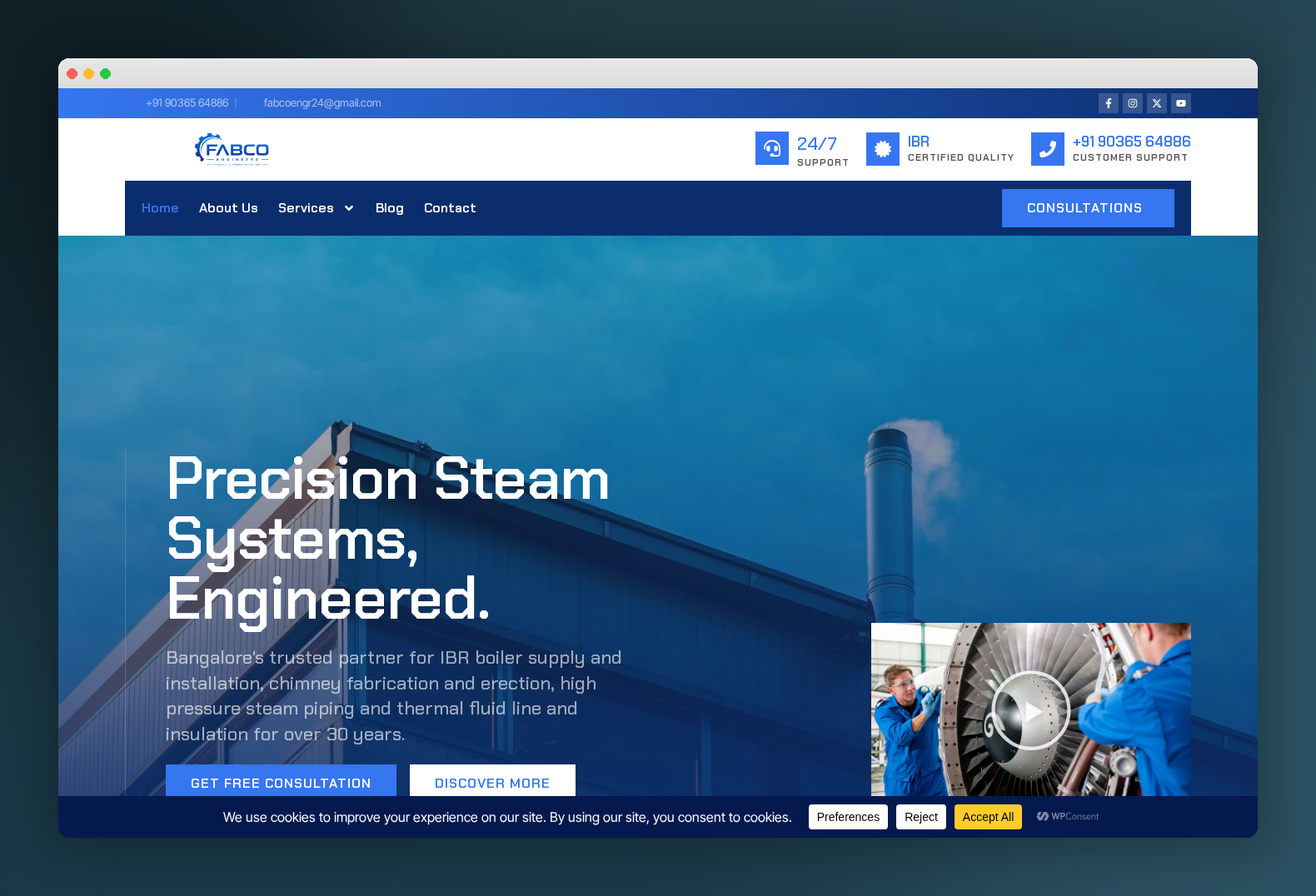
FABCO Engineers
Corporate site for an industrial engineering firm
Service architecture, enquiry funnel and technical SEO for a Bangalore boiler and fabrication specialist.
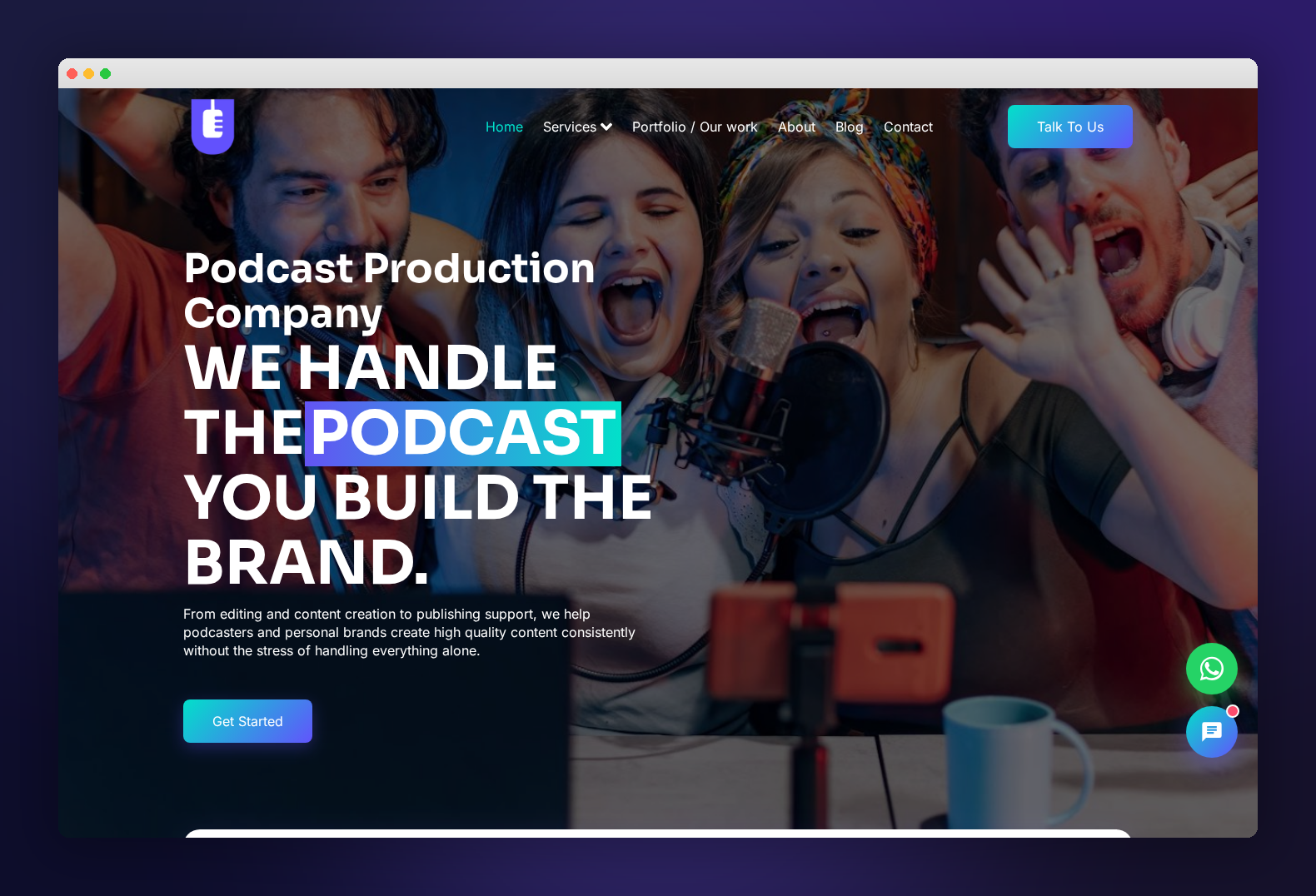
Usharo Media
Website for a podcast production studio
Positioning, portfolio structure and lead capture for a podcast and content production company.
Before we spend anything
The first two weeks of a paid engagement are usually not about ads. They are about measurement. We audit conversion tracking end to end, tags, events, form submissions, calls, WhatsApp clicks, offline closures where your CRM allows it, because an account optimising towards a broken or over counted conversion will confidently spend your budget in the wrong direction.
We also want the unit economics. Average order value, margin, repeat rate, close rate on enquiries, sales cycle length. A cost per lead of nine hundred rupees is either excellent or ruinous depending on numbers only you have. Agencies that never ask for them are optimising in the dark and reporting the parts that look good.
Then we audit what already exists: historical spend, wasted search terms, audience overlap, creative fatigue, landing pages that leak. On most accounts there is meaningful budget to recover before a single new campaign launches.
- Google Ads
- Search, Shopping, Performance Max and YouTube, with tight negative keyword hygiene and query level review.
- Meta Ads
- Prospecting and retargeting across Facebook and Instagram, structured for stable learning rather than constant resets.
- LinkedIn & B2B
- Account list targeting, lead gen forms and content sequencing for long, committee driven purchases.
- Programmatic & display
- Awareness and retargeting inventory bought with real placement exclusions, not left on autopilot.
Creative is the biggest lever left
Platform targeting has been largely automated. Bidding has been largely automated. What remains genuinely in your control is the offer and the creative, which is why we treat creative production as a core part of a media retainer rather than something the client supplies.
We work in testable batches: several distinct angles, not several colour variations of the same angle. A price led ad, a proof led ad, an objection handling ad, a founder to camera ad. The point is to learn which argument moves your market, then produce more of it. Static, motion and short form video all get built to platform native specs rather than resized from a print asset.
Fatigue is tracked as a scheduled event, not discovered when performance collapses. In competitive metros like Mumbai and Bangalore, an ad set can burn through its audience in three weeks, so the refresh pipeline is planned into the calendar from month one.
Landing experience is part of the media buy
Sending expensive traffic to a general homepage is the most common and most costly mistake in Indian paid media. Every serious campaign gets a landing experience matched to its promise, the same headline, the same offer, the same proof, one clear action, and a form that asks for the minimum you can actually work with.
We build and iterate those pages ourselves, so the loop between ad copy, page copy and conversion rate stays inside one team. When the page is the constraint, we fix the page instead of raising the bid, which is usually the cheaper of the two.
For lead gen businesses we also look past the form. Speed of first response, routing, follow up cadence and lead quality feedback from sales all shape what the media should be optimising towards. A campaign that produces a hundred leads nobody calls back within an hour is not a successful campaign.
How the money is managed
Budgets are allocated against a documented plan with a clear split between proven spend and testing spend, so experimentation never quietly consumes the performing campaigns. Scaling happens in steps that the algorithm can absorb, with checkpoints where we agree to continue or stop.
You own every account, pixel and data asset. If we part ways, everything stays with you, including the audiences and creative. Reporting is weekly in a shared dashboard and monthly in a written review that says what we changed, what it did, and what we intend to do next.
Who should be running paid media
Paid media works when you know roughly what a customer is worth and you can serve the demand you create. If a lead is worth two thousand rupees and you have capacity for forty more a month, the maths is simple. If neither number exists yet, the first job is finding them, not scaling spend.
It also suits businesses testing something new. Search and social will tell you within three weeks whether a message lands, which is far cheaper than discovering it after six months of content.
We will say no to accounts where the budget cannot cover meaningful learning, or where the landing experience is so weak that any traffic we buy is wasted. Fixing the page first is usually the better spend.
- Best fit
- Proven offers with room to grow, seasonal pushes, new market or product tests with a real budget.
- Weak fit
- Tiny budgets spread across four platforms, or campaigns pointed at a page nobody can convert on.
How we structure accounts and budgets
Structure follows intent, not platform defaults. Branded, high intent non branded, category research and retargeting are separated so their numbers never contaminate each other. That way, when performance moves, we can see which layer moved.
Budget allocation is reviewed weekly and reset monthly against contribution rather than clicks. We would rather run one channel properly than four badly, and we will tell you when a platform is not earning its place in the plan.
Creative is treated as the main variable, because it is. We plan a testing calendar of hooks, formats and offers, retire what fatigues, and keep a library of everything tested with its result so the same idea is not rediscovered every quarter.
Tracking, attribution and the honest limits
Before spend starts we verify tracking end to end: conversion events, server side where it helps, offline conversion imports for businesses that close on the phone, and consistent naming so reports reconcile with your CRM.
Attribution is imperfect and we do not pretend otherwise. Platform reported conversions will always be more generous than your bank account. We reconcile with your actual sales data and report on what your finance team can verify.
You keep every account. Ad accounts, pixels, business managers and audiences are created under your ownership. Agencies that hold these hostage are betting you will not leave, and that is not a relationship we want to be in.
What is included
Deliverables, spelled out.
Scope is agreed in writing before we start, so there is never a debate later about whether something was part of the engagement.
- 01Conversion tracking and attribution audit
- 02Account structure rebuild or fresh build
- 03Keyword, audience and placement strategy
- 04Ad creative production: static, motion and video
- 05Landing page design, build and testing
- 06Weekly optimisation and search term review
- 07Budget pacing and scaling plan
- 08Shared dashboard plus monthly written review
What makes DG5 different from a typical Performance ads agency.
How our Performance ads delivery model compares to two common alternatives businesses evaluate. Typical industry norms, not any specific competitor, so you can benchmark on capability and transparency rather than marketing claims.
Capability
DG5 Agency
Boutique agency
Large network agency
Strategy depth
DG5:End to end funnel strategy
Boutique:Strong in one niche
Network:Templated playbook
Team on your account
DG5:The strategist who scoped it stays on it
Boutique:Founder plus a small team
Network:Rotating account managers
Reporting
DG5:Live dashboard tied to leads and revenue
Boutique:Monthly call and deck
Network:PDF only
Scope
DG5:Web, SEO, ads and automation together
Boutique:One or two channels
Network:Separate channel silos
Turnaround
DG5:Weekly shipping cadence
Boutique:Fast but capacity limited
Network:Queued behind bigger retainers
When something fails
DG5:Flagged with the reason and the fix
Boutique:Depends on the founder
Network:Quietly dropped from the report
Contract
DG5:Flexible terms, earned monthly
Boutique:Flexible but informal
Network:Long lock ins
This comparison reflects our own delivery model and common evaluation criteria clients use when comparing agencies in Bangalore, not a claim about any specific competitor.
What clients say about working with us.

"DG5 rebuilt our site and aligned our SEO and paid lead generation around the product categories that actually drive enquiries. The leads that come in now already understand what we do before the first call."
"The travel content and video work DG5 produces feels like our own voice, just louder. Their reels and campaign posters have directly filled departure slots we would otherwise have struggled to close."

"DG5 runs our social channels, paid campaigns and website updates as one rhythm. The best part is the reporting: we know which post, which ad and which landing page moved the needle."
How the work runs.
Measure
Fix tracking, agree the target cost per acquisition against your real margins, audit historic spend.
Launch
Build campaigns and landing pages, ship several distinct creative angles, hold structure stable while it learns.
Scale
Cut what loses, expand what wins, refresh creative on schedule and push budget in absorbable increments.
What clients ask before signing.
What is a sensible starting budget?
+
For most local service businesses, meaningful learning starts around one lakh a month in media. Ecommerce and competitive metros usually need more. If your budget is below the threshold where a channel can learn, we will say so and suggest where to put the money instead.
How do you charge?
+
A flat monthly management fee based on scope and channel count, not a percentage of spend. A percentage model quietly rewards us for spending more of your money, which is the wrong incentive.
Who owns the ad accounts?
+
You do. We work inside your accounts under agency access. All data, audiences and creative remain yours if the engagement ends.
How soon will we see results?
+
Search campaigns often produce enquiries in the first fortnight. Social prospecting needs three to four weeks to get through the learning phase and produce a reliable cost per acquisition. Firm conclusions about creative angles take about six weeks.
What is the minimum budget worth starting with?
+
Enough to gather signal within a month on one channel. We will tell you honestly at the first call whether your budget can produce a usable read, rather than taking it and reporting noise.
Do you charge a percentage of ad spend?
+
We prefer a flat monthly management fee so our advice about your budget is never influenced by our invoice. Larger accounts can move to a hybrid model if it suits both sides.
Who owns the ad accounts?
+
You do, in every case. Accounts, pixels and audiences are built in your business manager and stay there whatever happens to the engagement.
Related services
SEO
SEO that earns qualified traffic: technical audits, keyword and intent mapping, on page work, local search and content that answers real buying questions. Bangalore based, working across India.
Ecommerce development
Online stores built to sell: Shopify, WooCommerce and custom stacks tuned for page speed, catalogue clarity, checkout completion and repeat purchase.
Marketing automation
Lifecycle email, CRM workflows and lead nurture built once and refined continuously, welcome journeys, cart recovery, win back and sales follow up that runs without reminders.
This month only
Start performance ads. Get 1 month of social media management free.
Content, posting and reporting for your channels, run by our social team at no cost for the first month of any engagement.
Tell us what you are trying to grow.
Send us the context, the product, the market, what has already been tried. You will get a straight answer about whether we can help and what it would take, usually within one working day.
+91 78999 13338 · hello@dg5agency.com