

Stores built around the checkout, not the homepage.
An ecommerce site is a machine with four moving parts: how people find products, how quickly they understand them, how easily they pay, and whether they ever come back. Most stores we inherit are beautifully designed at the top of that list and neglected at the bottom, which is why their traffic looks healthy and their revenue does not.
- 3 clicks
- Target from landing to cart
- Mobile first
- Where most Indian orders happen
- Post purchase
- Treated as part of the build
Brands we work with
Teams we run ecommerce development and more for.

In short
We build and rebuild stores with the order of importance reversed. Checkout, product page, catalogue navigation, then the homepage, because the homepage is where the fewest purchases actually begin.
02
Work we are happy to put our name on.
A small, real portfolio rather than a wall of borrowed logos. Websites, short form video and campaign design produced for clients who are still running the work today.
Fast, search ready websites built to be handed over in full, with the hosting, the analytics and the code in your name.
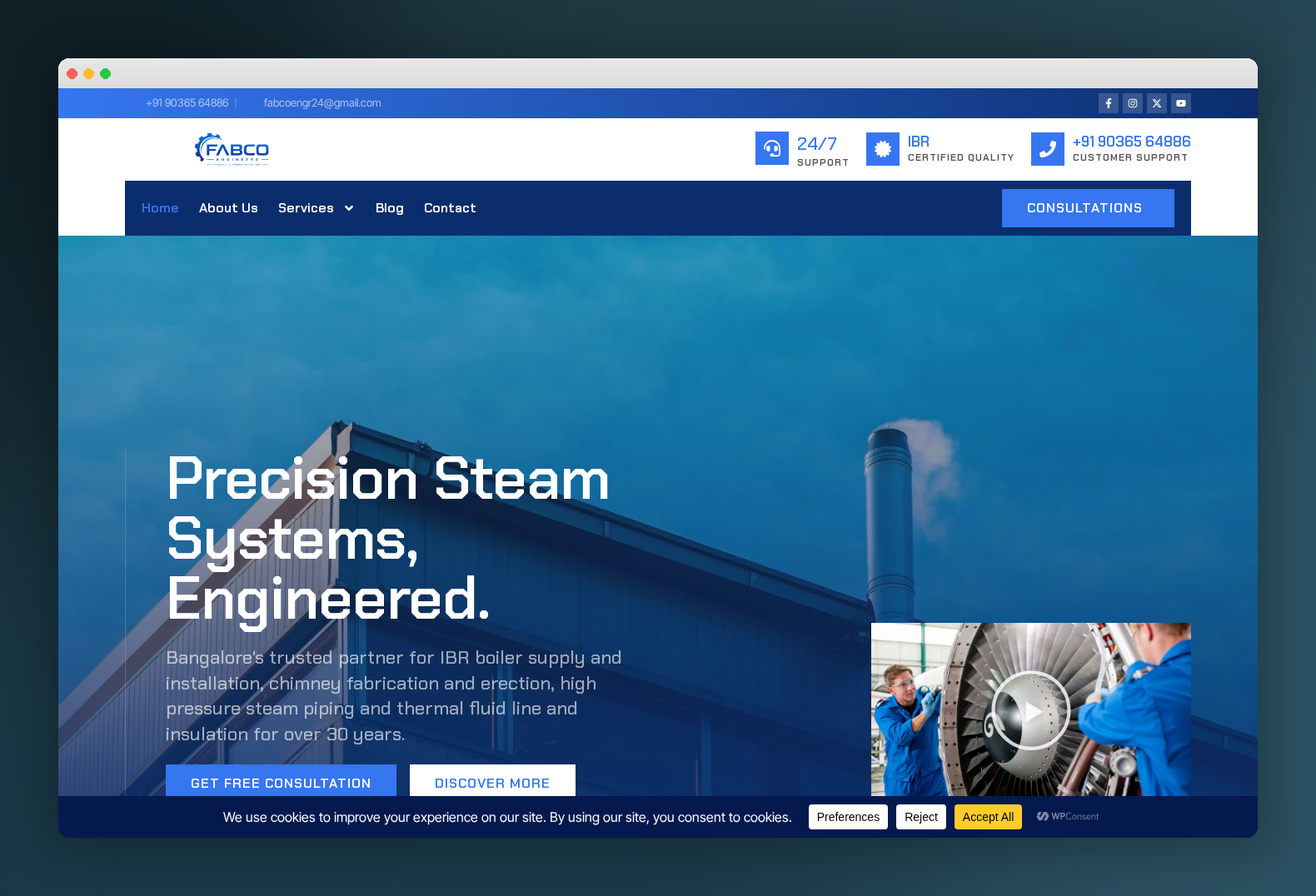
FABCO Engineers
Corporate site for an industrial engineering firm
Service architecture, enquiry funnel and technical SEO for a Bangalore boiler and fabrication specialist.
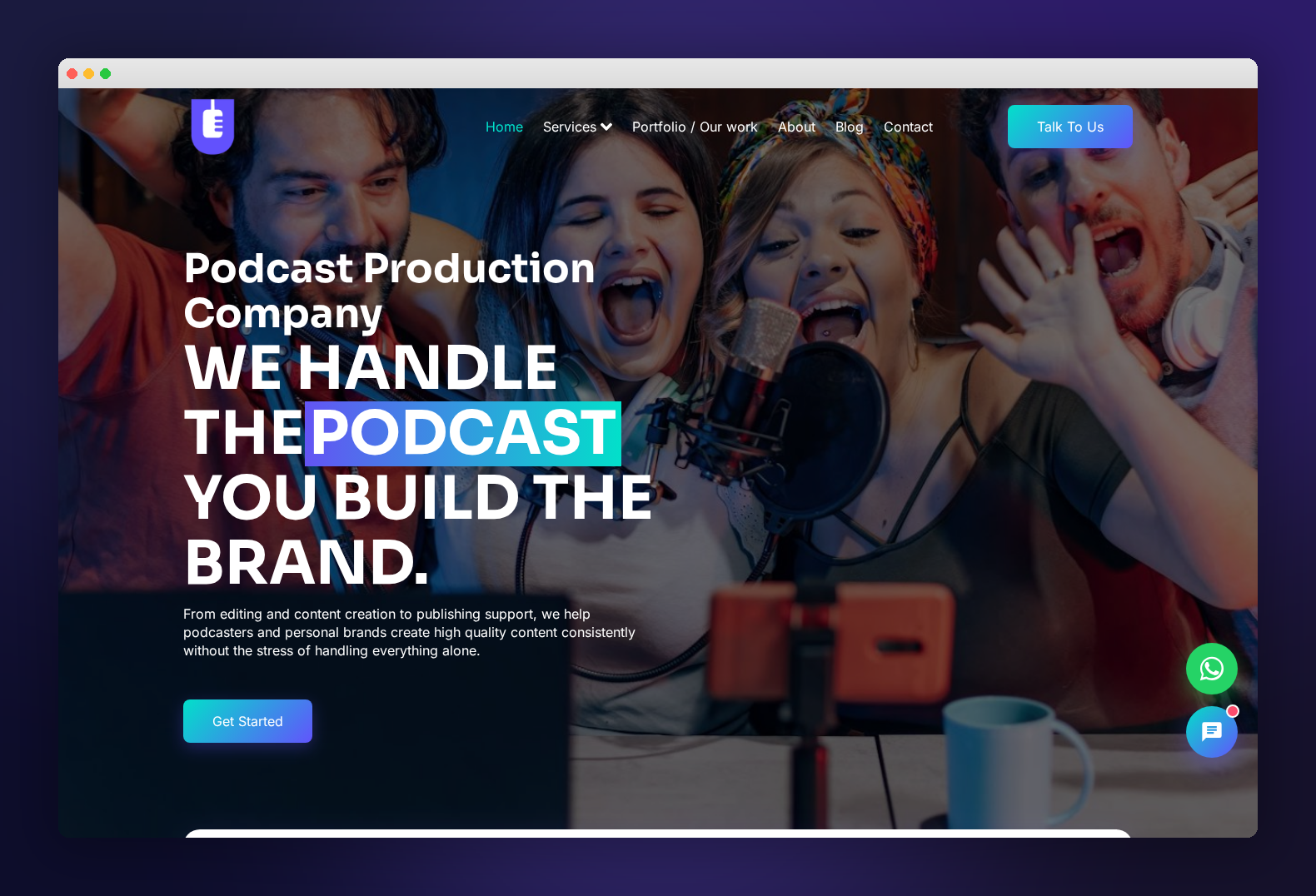
Usharo Media
Website for a podcast production studio
Positioning, portfolio structure and lead capture for a podcast and content production company.
Choosing the right stack
Shopify suits most brands under a few thousand SKUs: reliable, fast to launch, strong app ecosystem, predictable costs. WooCommerce makes sense when you need unusual pricing logic, deep WordPress content integration or full control of hosting. A headless or custom build earns its cost only at real scale, or when the catalogue behaves in a way packaged platforms fight.
We make that recommendation after looking at your catalogue structure, order volume, fulfilment process, payment mix and the size of the team who will run it day to day. Recommending the most complex option is easy and profitable; it is also how brands end up paying for infrastructure they will not use for four years.
Migrations get the same care as new builds: product and customer data mapped and verified, URL structure preserved with permanent redirects, reviews carried across, and a rollback plan for launch day.
- Shopify
- Custom themes, app integration, subscriptions and multi currency where required.
- WooCommerce
- Complex pricing, B2B ordering, content led stores on WordPress.
- Headless & custom
- For large catalogues, unusual logic or performance critical storefronts.
- Operations
- Payment gateways, shipping rules, GST handling, ERP and inventory sync.
The product page does the selling
Product pages carry the majority of your organic search visibility and almost all of your purchase decisions, yet they are usually the least considered template in a build. We design them around the questions people actually ask before buying: how big is it, how does it look on someone like me, when will it arrive, what happens if it does not fit, and why is it more expensive than the alternative in the next tab.
That means image sets shot for zoom on a phone, size and specification tables that are readable without pinching, delivery estimates by pincode where the logistics allow it, returns policy stated plainly rather than hidden in a footer link, and reviews with enough substance to be believed.
Structured data goes on every product, price, availability, rating, shipping, so that listings render richly in search and stay accurate when stock changes. For catalogue pages we build filters that generate clean, crawlable URLs for the combinations worth ranking and no index the thousands of combinations that are not.
Recovering the orders you are already losing
Roughly seven in ten Indian ecommerce carts are abandoned, and a large share of those are recoverable with basic systems most stores never finish setting up. Abandoned cart email and WhatsApp sequences, browse abandonment reminders, back in stock alerts, and a genuinely one page checkout with the payment methods your customers prefer, UPI first, cards and wallets close behind, cash on delivery where your margins tolerate it.
Prepaid conversion is its own project for many Indian brands. Small prepaid incentives, clear delivery promises and a trustworthy checkout can shift the prepaid share meaningfully, which cuts returns, cuts logistics cost and improves cash flow more than an equivalent lift in traffic would.
After the sale we build the part most stores skip: order status messaging, review requests timed to actual delivery, replenishment reminders for consumables, and win back flows for lapsed buyers. Repeat purchase is the cheapest revenue in the business, and it is almost entirely an automation problem.
Working with the rest of your marketing
Because we also run the ads, the SEO and the automation, the store is built with those channels in mind: product feeds structured for Shopping campaigns, landing templates ready for paid traffic, event tracking configured for the platforms, and content pages that can rank for the informational searches your category generates.
Reporting joins the same picture, sessions, conversion rate by device, average order value, repeat rate and contribution margin by channel, so decisions about spend are made against profit rather than revenue.
Who this is for
Stores at three points benefit most: launching with real inventory and a plan to market it, replatforming off something slow or unmaintainable, and established stores where checkout or catalogue problems are quietly capping revenue.
The best projects come from teams who know their margins, their shipping costs and their return rate. Those numbers decide almost every design choice worth arguing about, from free shipping thresholds to how aggressively to push bundles.
If you are testing whether a product sells at all, a full custom build is premature. Start on a lean setup, prove demand, then invest in the store the demand deserves.
- Best fit
- Brands with stock, margin clarity and a marketing plan behind the launch.
- Weak fit
- Unvalidated products where a full custom build would outrun the demand.
Checkout, catalogue and the details that move revenue
Most stores lose more money in the catalogue and checkout than anywhere else. Filters that do not match how people shop, product pages missing the one specification buyers care about, shipping cost revealed at the last step, and a mobile checkout with more fields than anyone will tolerate.
We design the buying path first: search and filtering that reflect your real catalogue, product pages that answer sizing, delivery, returns and compatibility without a support ticket, cart behaviour that encourages the second item, and a checkout stripped to the minimum with payment methods your customers actually use.
Everything is instrumented. Add to cart, checkout steps, payment failures and search terms with no results all feed reporting, so improvements are chosen from evidence rather than opinion.
After launch, where the compounding happens
A store is a system that needs tending. Abandoned cart and browse recovery, post purchase sequences, review collection, back in stock alerts and a simple loyalty mechanic together usually add more to annual revenue than another redesign would.
We connect the store to your marketing stack so product feeds, audiences and lifecycle messages stay in sync, and we set up reporting that shows contribution by channel, by product and by cohort rather than a single revenue line.
Operationally, we make sure your team can run it: bulk editing, stock rules, discount setup, order flows and a documented process for the seasonal work. You should never need a developer to launch a sale.
What is included
Deliverables, spelled out.
Scope is agreed in writing before we start, so there is never a debate later about whether something was part of the engagement.
- 01Platform recommendation and technical architecture
- 02Custom theme design and build
- 03Catalogue structure, filters and search
- 04Checkout optimisation and payment integration
- 05Product feed setup for Shopping and social
- 06Abandoned cart, browse and win back automation
- 07Data migration with redirect mapping
- 08Analytics, ecommerce tracking and team training
What makes DG5 different from a typical Ecommerce development agency.
How our Ecommerce development delivery model compares to two common alternatives businesses evaluate. Typical industry norms, not any specific competitor, so you can benchmark on capability and transparency rather than marketing claims.
Capability
DG5 Agency
Boutique agency
Large network agency
Strategy depth
DG5:End to end funnel strategy
Boutique:Strong in one niche
Network:Templated playbook
Team on your account
DG5:The strategist who scoped it stays on it
Boutique:Founder plus a small team
Network:Rotating account managers
Reporting
DG5:Live dashboard tied to leads and revenue
Boutique:Monthly call and deck
Network:PDF only
Scope
DG5:Web, SEO, ads and automation together
Boutique:One or two channels
Network:Separate channel silos
Turnaround
DG5:Weekly shipping cadence
Boutique:Fast but capacity limited
Network:Queued behind bigger retainers
When something fails
DG5:Flagged with the reason and the fix
Boutique:Depends on the founder
Network:Quietly dropped from the report
Contract
DG5:Flexible terms, earned monthly
Boutique:Flexible but informal
Network:Long lock ins
This comparison reflects our own delivery model and common evaluation criteria clients use when comparing agencies in Bangalore, not a claim about any specific competitor.
What clients say about working with us.

"DG5 rebuilt our site and aligned our SEO and paid lead generation around the product categories that actually drive enquiries. The leads that come in now already understand what we do before the first call."

"The travel content and video work DG5 produces feels like our own voice, just louder. Their reels and campaign posters have directly filled departure slots we would otherwise have struggled to close."

"DG5 runs our social channels, paid campaigns and website updates as one rhythm. The best part is the reporting: we know which post, which ad and which landing page moved the needle."
How the work runs.
Model the store
Catalogue, margins, fulfilment and payment mix reviewed before design, so the build matches how you actually trade.
Design and build
Templates built checkout first, tested on real devices and real connection speeds with your live product data.
Sell and retain
Launch, then a continuous programme of conversion testing, feed health and lifecycle automation.
What clients ask before signing.
Shopify or WooCommerce?
+
Shopify for most brands that want to trade rather than administer software. WooCommerce when you need unusual pricing, B2B ordering or tight integration with an existing WordPress content operation. We recommend after reviewing your catalogue and team.
Can you migrate our existing store without losing rankings?
+
Yes. Every indexed URL is mapped and redirected, product data and reviews are carried over, and Search Console is monitored closely for the first few weeks after launch.
Do you handle product photography?
+
We can arrange and art direct product and lifestyle shoots, or work with your existing assets and set the specification for future shoots so the catalogue stays consistent.
How do you improve conversion rate after launch?
+
Through a queue of prioritised tests based on session recordings, funnel drop off and search behaviour on your own site, usually checkout friction, product page clarity and delivery messaging before anything cosmetic.
Shopify or WooCommerce or custom?
+
Shopify for speed and reliability, WooCommerce when you need deep control inside an existing WordPress site, custom only when the catalogue or logic genuinely demands it. We recommend based on your catalogue and team, not our preference.
Can you migrate our existing store?
+
Yes. Products, customers, orders and URLs are migrated with a full redirect map so search visibility and customer history survive the move.
Do you handle payment and shipping setup for India?
+
Yes, including domestic gateways, cash on delivery flows, courier integrations and tax configuration, tested with live transactions before launch.
Related services
Website development
Fast, search ready websites built to convert. DG5 designs and builds responsive sites in Bangalore with page speed, accessibility and lead capture handled from the first wireframe.
Performance ads
Paid campaigns managed for profit, not impressions. Google, Meta and programmatic media planned, built and optimised around cost per qualified lead and return on ad spend.
WhatsApp & SMS chatbots
Conversational systems on WhatsApp and SMS that qualify leads, answer real questions, recover carts and send order updates, built on the official Business API.
This month only
Start ecommerce development. Get 1 month of social media management free.
Content, posting and reporting for your channels, run by our social team at no cost for the first month of any engagement.
Tell us what you are trying to grow.
Send us the context, the product, the market, what has already been tried. You will get a straight answer about whether we can help and what it would take, usually within one working day.
+91 78999 13338 · hello@dg5agency.com