
One plan across every channel, not five vendors reporting differently.
Most businesses do not have a channel problem, they have a coordination problem. The SEO agency reports rankings, the ad agency reports clicks, the social team reports engagement, and nobody in the room can tell you what any of it actually did to revenue this quarter. Each channel looks fine in isolation while the business underperforms as a whole.
- 1 funnel
- Awareness through retention, planned together
- 1 dashboard
- Every channel measured against the same goal
- Quarterly
- Strategy resets based on what actually worked
Brands we work with
Teams we run digital marketing and more for.
In short
Digital marketing, done properly, is not a bundle of separate services sold together. It is one funnel, one measurement framework, and one set of priorities that decides where the next rupee of effort goes based on what is actually converting, not on which channel has budget left over.
02
Work we are happy to put our name on.
A small, real portfolio rather than a wall of borrowed logos. Websites, short form video and campaign design produced for clients who are still running the work today.
Fast, search ready websites built to be handed over in full, with the hosting, the analytics and the code in your name.
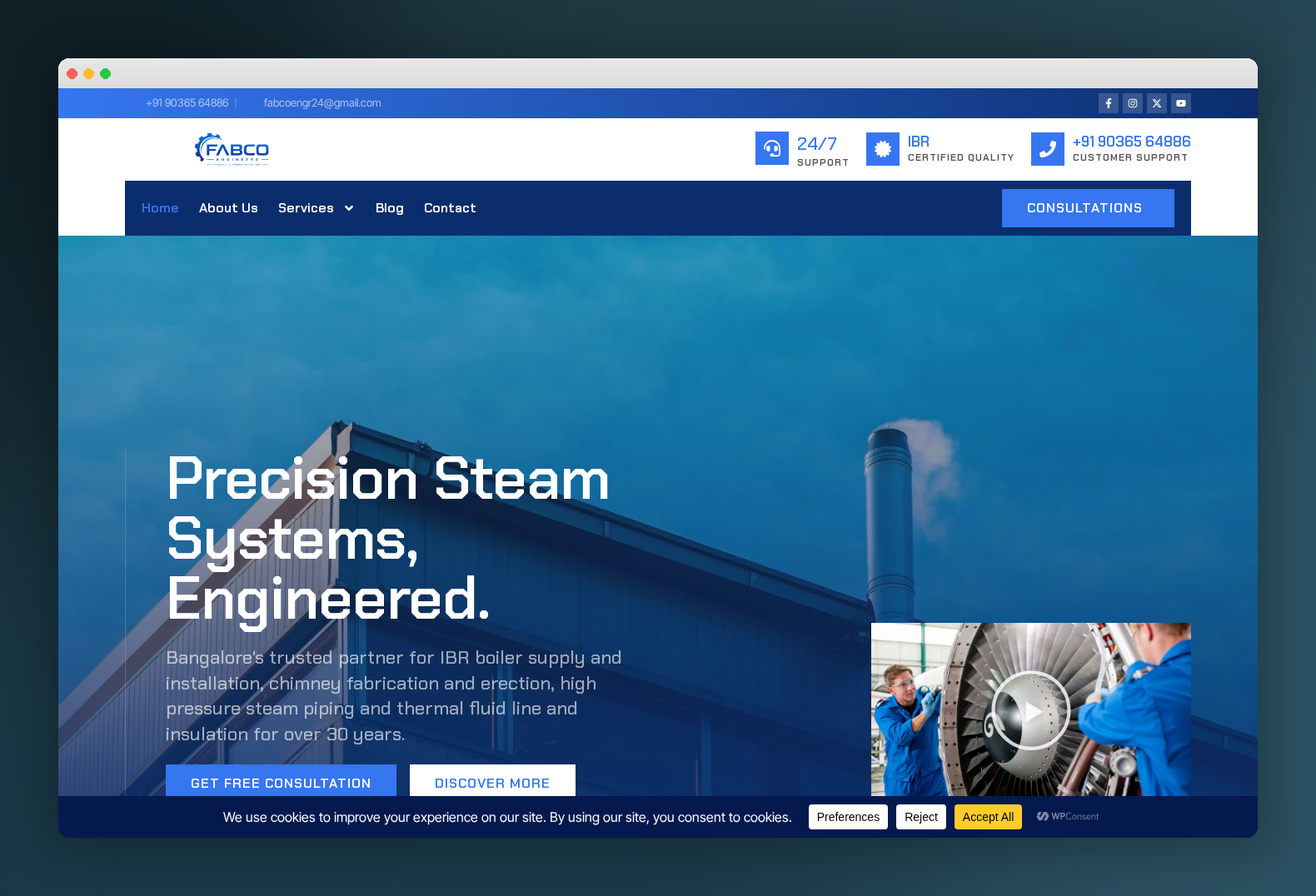
FABCO Engineers
Corporate site for an industrial engineering firm
Service architecture, enquiry funnel and technical SEO for a Bangalore boiler and fabrication specialist.
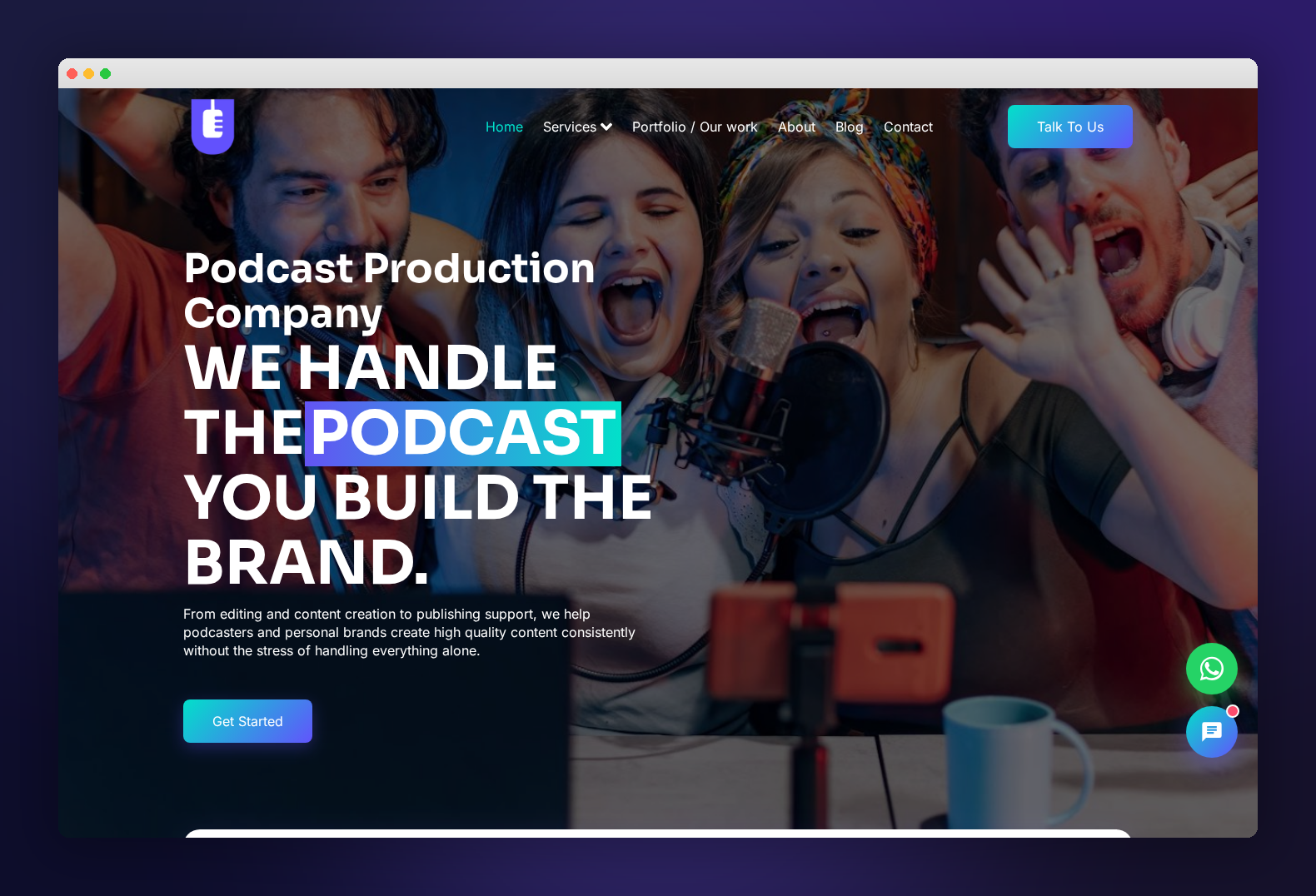
Usharo Media
Website for a podcast production studio
Positioning, portfolio structure and lead capture for a podcast and content production company.
Starting with the funnel, not the channel list
Before we recommend a single platform, we map how your specific buyer actually moves from first hearing about you to becoming a customer, and what happens after that. For a considered B2B purchase that might be months and multiple touchpoints. For an impulse ecommerce purchase it might be minutes. The channel mix should follow that shape, not a template.
We then identify where the funnel is genuinely leaking. Sometimes the problem is at the top, nobody has heard of you in a crowded category. Sometimes it is in the middle, plenty of interest but nothing convincing people to commit. Sometimes it is retention, you are paying repeatedly to reacquire customers who should have come back on their own. Spending more on the wrong stage rarely helps.
Only once that diagnosis is done do we recommend the specific mix, which channels lead, which support, and how budget should be weighted between them for your business specifically.
- Funnel and channel audit
- Where your current marketing effort sits against where your buyers actually drop off.
- Unified measurement
- One dashboard tying search, paid, social and email back to the same revenue and lead numbers.
- Channel prioritisation
- A ranked, budgeted plan for which channels lead and which support, revisited every quarter.
- Creative and content system
- One content engine feeding organic, paid and social rather than three teams producing separately.
How the channels work together
Search, whether organic or paid, tends to capture demand that already exists. Social and display tend to create awareness of demand that has not been actively searched for yet. Email and lifecycle marketing retain and reactivate people already in your orbit. Treated as one system, each stage feeds the next: awareness content built for social gets repurposed into search optimised long form pieces, retargeting audiences are built from organic and paid traffic together, and lifecycle emails draw on the same messaging tested first in ad copy.
This cross use of assets is where a coordinated approach earns back the time it costs to set up. Instead of five separate content calendars, one calendar produces material that gets adapted across every channel, cutting production cost while keeping messaging consistent everywhere a prospect encounters you.
We are equally comfortable running every channel ourselves or working alongside specialist teams you already have, plugging into the parts of the plan that need external capacity while leaving strategy and measurement centralised.
Content as the connective layer
Nearly every channel in a digital marketing plan runs on content, ad creative, landing pages, organic posts, email copy, blog articles. We build a single content system rather than separate briefs per channel, starting from the core messages and proof points that matter to your buyer, then adapting format and length per platform.
This also protects brand consistency. It is common for a business's paid ads, website copy and social presence to sound like three different companies because they were each produced by a different vendor working from a different brief. A shared content system prevents that drift without slowing anyone down.
Measurement that ties back to revenue
The report we build tracks every channel against the same underlying goals, qualified leads, cost per acquisition, revenue where attribution allows it, rather than each channel reporting its own preferred vanity metric. Where full attribution is not realistic, and for many multi touch B2B journeys it genuinely is not, we say so and use the best available proxy rather than presenting false precision.
Quarterly, we step back from the monthly optimisation detail and reassess the whole plan: which channels are earning more budget, which are being scaled back, and whether the funnel diagnosis from the start of the engagement still holds as the business and market have moved.
Who this suits
This approach suits businesses ready to think about marketing as a system rather than a shopping list of tactics, typically once they have outgrown running one channel in isolation and are feeling the cost of disconnected reporting and inconsistent messaging.
It is less suited to businesses that need a single narrow deliverable, one campaign, one landing page, one channel fixed. For that, engaging us on the specific service directly is usually faster and more cost effective than a full strategic engagement.
- Best fit
- Businesses running multiple channels already and needing them coordinated, or scaling from one channel to several.
- Weak fit
- Single narrow deliverables better served by engaging one specific service directly.
What is included
Deliverables, spelled out.
Scope is agreed in writing before we start, so there is never a debate later about whether something was part of the engagement.
- 01Funnel and channel diagnostic
- 02Unified measurement and reporting dashboard
- 03Quarterly channel prioritisation and budget plan
- 04Shared content system across channels
- 05Coordinated search, paid, social and lifecycle execution
- 06Brand and message consistency review
- 07Vendor and specialist team coordination where relevant
- 08Quarterly strategy resets based on performance
What makes DG5 different from a typical Digital marketing agency.
How our Digital marketing delivery model compares to two common alternatives businesses evaluate. Typical industry norms, not any specific competitor, so you can benchmark on capability and transparency rather than marketing claims.
Capability
DG5 Agency
Boutique agency
Large network agency
Strategy depth
DG5:End to end funnel strategy
Boutique:Strong in one niche
Network:Templated playbook
Team on your account
DG5:The strategist who scoped it stays on it
Boutique:Founder plus a small team
Network:Rotating account managers
Reporting
DG5:Live dashboard tied to leads and revenue
Boutique:Monthly call and deck
Network:PDF only
Scope
DG5:Web, SEO, ads and automation together
Boutique:One or two channels
Network:Separate channel silos
Turnaround
DG5:Weekly shipping cadence
Boutique:Fast but capacity limited
Network:Queued behind bigger retainers
When something fails
DG5:Flagged with the reason and the fix
Boutique:Depends on the founder
Network:Quietly dropped from the report
Contract
DG5:Flexible terms, earned monthly
Boutique:Flexible but informal
Network:Long lock ins
This comparison reflects our own delivery model and common evaluation criteria clients use when comparing agencies in Bangalore, not a claim about any specific competitor.
What clients say about working with us.

"DG5 rebuilt our site and aligned our SEO and paid lead generation around the product categories that actually drive enquiries. The leads that come in now already understand what we do before the first call."
"The travel content and video work DG5 produces feels like our own voice, just louder. Their reels and campaign posters have directly filled departure slots we would otherwise have struggled to close."

"DG5 runs our social channels, paid campaigns and website updates as one rhythm. The best part is the reporting: we know which post, which ad and which landing page moved the needle."
How the work runs.
Diagnose the funnel
Map the buyer journey, audit current channel performance, and identify exactly where demand is being lost.
Build the coordinated plan
Prioritise channels, set shared measurement, and build the content system that feeds every channel from one source.
Run, measure, reset
Execute across channels with unified reporting, then reassess priorities and budget every quarter based on results.
What clients ask before signing.
How is this different from just hiring separate SEO, ads and social agencies?
+
Separate agencies each optimise their own channel in isolation and report their own preferred metric. This engagement plans across channels together, against one funnel and one measurement framework, so budget goes where it actually moves revenue rather than where a single vendor's mandate happens to be.
Do you replace all our current vendors?
+
Not necessarily. We can run every channel directly, or centralise strategy and measurement while your existing specialist teams continue execution. What matters is that the plan and reporting are unified.
How do you decide which channels get the budget?
+
From the funnel diagnosis first, then ongoing performance data. We would rather fully fund what is proven to work and scale back what is not than spread budget evenly across channels out of habit.
Can you really measure everything back to revenue?
+
For many businesses, largely yes. For complex multi touch B2B journeys, full attribution is genuinely difficult and we will tell you honestly where we are using the best available proxy rather than presenting a number with false precision.
How long before we see the funnel improve?
+
Early wins, usually tracking and quick channel fixes, typically show within the first month. Meaningful shifts in overall funnel performance usually take a full quarter, since that is the cycle we use to reset priorities based on real data.
What size of business is this suited to?
+
Typically businesses already running more than one channel and feeling the cost of disconnected reporting, or scaling quickly enough that coordination has become the bottleneck rather than any single channel's execution.
Who owns the strategy and data if we end the engagement?
+
You do. The measurement dashboard, content system and documentation are built in your own accounts and tools from the start.
Related services
SEO
SEO that earns qualified traffic: technical audits, keyword and intent mapping, on page work, local search and content that answers real buying questions. Bangalore based, working across India.
Performance ads
Paid campaigns managed for profit, not impressions. Google, Meta and programmatic media planned, built and optimised around cost per qualified lead and return on ad spend.
Marketing automation
Lifecycle email, CRM workflows and lead nurture built once and refined continuously, welcome journeys, cart recovery, win back and sales follow up that runs without reminders.
This month only
Start digital marketing. Get 1 month of social media management free.
Content, posting and reporting for your channels, run by our social team at no cost for the first month of any engagement.
Tell us what you are trying to grow.
Send us the context, the product, the market, what has already been tried. You will get a straight answer about whether we can help and what it would take, usually within one working day.
+91 78999 13338 · hello@dg5agency.com