
Show up for the search that already has intent behind it.
Search engine marketing is the paid counterpart to organic search: buying the top of the results page for the exact moment someone is typing a query with commercial intent. Done well, it is the most predictable channel available, because you know almost exactly what someone was thinking when they clicked. Done poorly, it is the fastest way to fund your competitor's brand awareness.
- Same day
- Traffic once campaigns go live
- 1 goal
- Cost per qualified enquiry, not cost per click
- Weekly
- Search term and bid review cycle
Brands we work with
Teams we run search engine marketing and more for.
In short
We treat SEM as an extension of how someone actually searches, not a bidding exercise. That means intent led account structure, ad copy that matches the specific query rather than a generic offer, and landing pages built to close the exact promise made in the ad.
02
Work we are happy to put our name on.
A small, real portfolio rather than a wall of borrowed logos. Websites, short form video and campaign design produced for clients who are still running the work today.
Fast, search ready websites built to be handed over in full, with the hosting, the analytics and the code in your name.
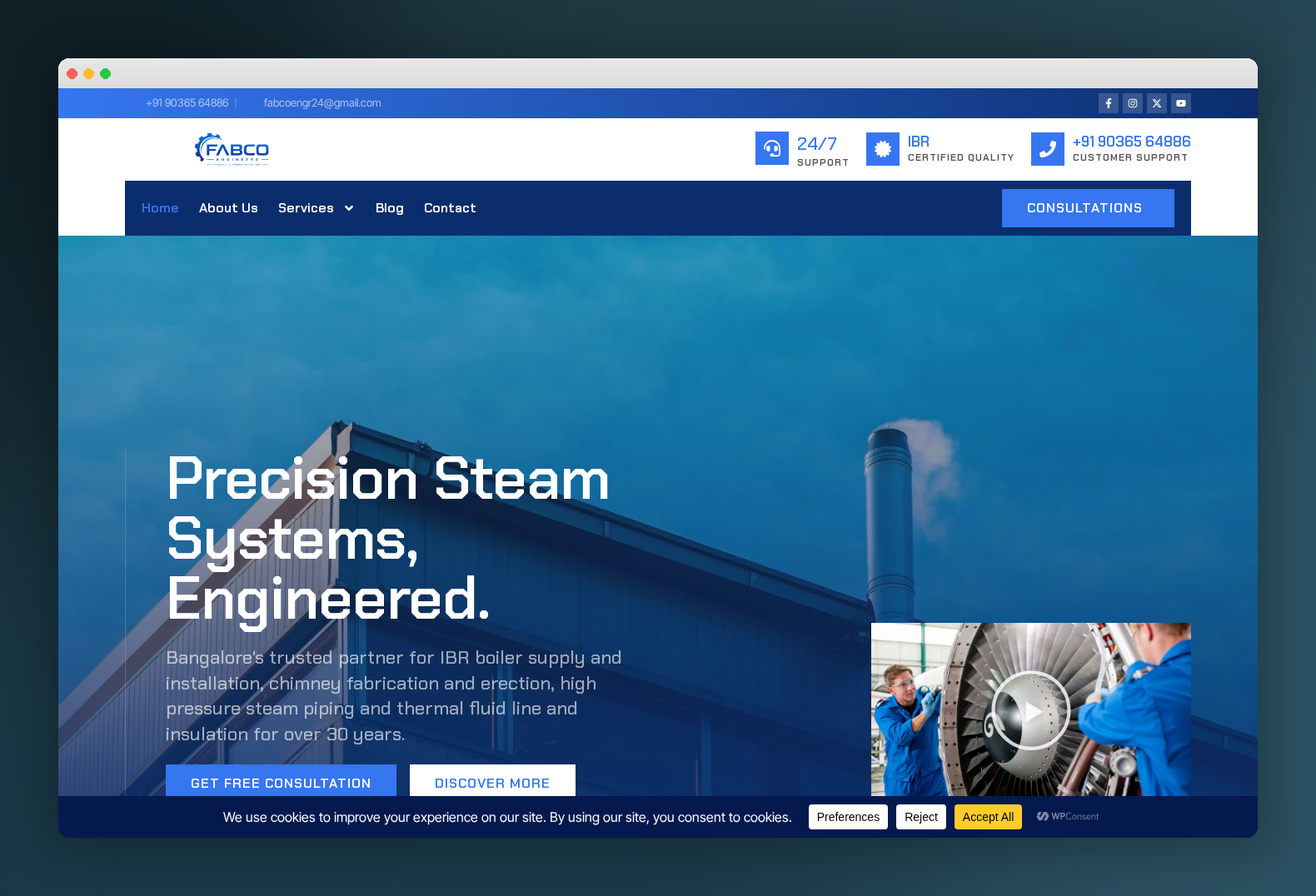
FABCO Engineers
Corporate site for an industrial engineering firm
Service architecture, enquiry funnel and technical SEO for a Bangalore boiler and fabrication specialist.
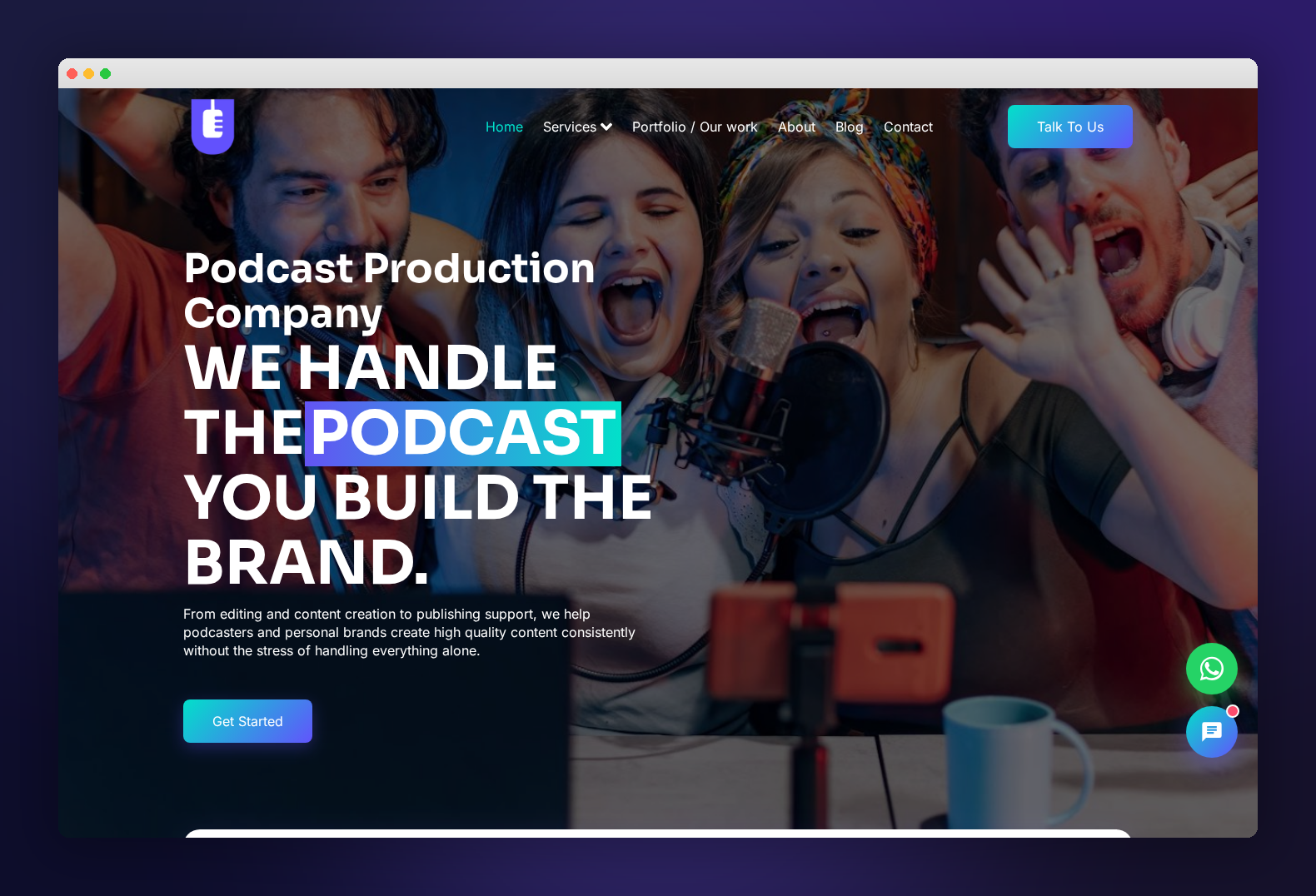
Usharo Media
Website for a podcast production studio
Positioning, portfolio structure and lead capture for a podcast and content production company.
Account structure that matches intent
Most underperforming Google Ads accounts share the same root problem: broad campaigns mixing high intent transactional searches with vague, early stage research queries, all competing for the same budget with the same generic ad. We rebuild structure around intent tiers, so a search for "buy" or "price" gets a different campaign, budget and ad than a search for "what is" or "how does".
This matters because it lets us bid aggressively where intent is highest and cheaply where it is not, rather than averaging the two into a mediocre result everywhere. It also makes reporting honest: you can see exactly what a bottom funnel click costs versus a top funnel one, instead of one blended number that hides both.
We build in negative keywords aggressively from day one based on your actual offer, not a generic list, since the fastest way to waste search budget is paying for clicks from people searching for something adjacent but not what you sell.
- Intent tiered campaigns
- Separate structure and budget for transactional, comparison and early research queries.
- Search term mining
- Weekly review of actual queries triggering your ads, with negatives added continuously.
- Ad copy matched to query
- Responsive search ads written around the specific intent of each ad group, not one generic message reused everywhere.
- Landing page alignment
- The page a click lands on matches the exact promise in the ad, with quality score and conversion rate both benefiting.
Bidding and budget, decided by economics
Automated bidding strategies work well once an account has enough conversion data to learn from, and work badly when applied to a new account with no history. We manage this transition deliberately, starting with more manual control where needed and shifting to automated strategies once there is a reliable conversion signal to optimise against.
Budget allocation follows the same logic as structure. We would rather fully fund the campaigns proven to return a qualified enquiry at an acceptable cost and cap the ones still being tested, rather than spreading spend evenly across everything and hoping the average works out.
We also factor in your actual margin and sales close rate before recommending a target cost per acquisition, since a healthy cost per lead in one business is unsustainable in another. This conversation happens before the account is built, not after the first invoice.
Beyond Google: Bing, YouTube search and shopping
Google Ads carries most search budgets and usually should, but it is rarely the whole picture. Microsoft Bing Ads often delivers a lower cost per click with a higher average customer value audience in B2B categories, and we run it wherever the volume justifies it. YouTube search placements and Google Shopping campaigns for retail clients extend the same intent driven logic into adjacent formats.
For ecommerce clients specifically, Shopping campaign feed quality tends to matter more than bidding sophistication. Titles, categories, images and pricing accuracy in the product feed frequently explain more of the performance gap than any bid adjustment could.
Reporting built around the number that matters
The monthly report leads with cost per qualified lead or purchase, broken down by intent tier and campaign, alongside spend efficiency trends and the specific search terms driving results. Click through rate and impression share are included as supporting context, not headline numbers, since neither one pays your bills.
You also get a plain account of what changed that month and why: which campaigns were scaled, which were paused, which new negatives were added, so the account's direction is never opaque even between review calls.
Who this suits
SEM works best where there is measurable search demand for what you sell, a clear enough offer to write a compelling ad for, and a sales process that can handle enquiries arriving quickly once campaigns go live. It is the fastest route to qualified traffic when organic search is still being built out.
It is a weaker fit if your product has essentially no search volume yet, since paid search cannot manufacture demand that does not exist, or if your margins cannot sustainably support the realistic cost per click in a competitive category. We will tell you honestly if the numbers do not work before recommending you spend against them.
- Best fit
- Measurable search demand, clear offer, sales team ready to handle enquiries quickly.
- Weak fit
- Categories with no search volume, margins too thin for the realistic cost per click.
What is included
Deliverables, spelled out.
Scope is agreed in writing before we start, so there is never a debate later about whether something was part of the engagement.
- 01Intent tiered campaign architecture on Google and Bing
- 02Keyword research and negative keyword management
- 03Ad copy written and tested per intent group
- 04Landing page alignment recommendations
- 05Bid strategy management and budget allocation
- 06Shopping and YouTube search campaigns where relevant
- 07Weekly search term and performance review
- 08Monthly reporting on cost per qualified lead
What makes DG5 different from a typical Search engine marketing agency.
How our Search engine marketing delivery model compares to two common alternatives businesses evaluate. Typical industry norms, not any specific competitor, so you can benchmark on capability and transparency rather than marketing claims.
Capability
DG5 Agency
Boutique agency
Large network agency
Strategy depth
DG5:End to end funnel strategy
Boutique:Strong in one niche
Network:Templated playbook
Team on your account
DG5:The strategist who scoped it stays on it
Boutique:Founder plus a small team
Network:Rotating account managers
Reporting
DG5:Live dashboard tied to leads and revenue
Boutique:Monthly call and deck
Network:PDF only
Scope
DG5:Web, SEO, ads and automation together
Boutique:One or two channels
Network:Separate channel silos
Turnaround
DG5:Weekly shipping cadence
Boutique:Fast but capacity limited
Network:Queued behind bigger retainers
When something fails
DG5:Flagged with the reason and the fix
Boutique:Depends on the founder
Network:Quietly dropped from the report
Contract
DG5:Flexible terms, earned monthly
Boutique:Flexible but informal
Network:Long lock ins
This comparison reflects our own delivery model and common evaluation criteria clients use when comparing agencies in Bangalore, not a claim about any specific competitor.
What clients say about working with us.

"DG5 rebuilt our site and aligned our SEO and paid lead generation around the product categories that actually drive enquiries. The leads that come in now already understand what we do before the first call."

"The travel content and video work DG5 produces feels like our own voice, just louder. Their reels and campaign posters have directly filled departure slots we would otherwise have struggled to close."

"DG5 runs our social channels, paid campaigns and website updates as one rhythm. The best part is the reporting: we know which post, which ad and which landing page moved the needle."
How the work runs.
Structure and build
Map search intent, build the account architecture, and set up conversion tracking before any spend goes live.
Launch and refine
Launch with tighter manual control, mine search terms weekly, and refine ad copy and negatives continuously.
Scale what works
Shift budget toward campaigns proving out cost per qualified lead, and expand into new intent groups and platforms.
What clients ask before signing.
How is SEM different from SEO?
+
SEM is paid placement at the top of search results, live the moment campaigns launch. SEO earns organic ranking over months. Most clients run both, using SEM for immediate volume while SEO builds underneath it.
How much should I budget for Google Ads?
+
It depends on your category's cost per click and your target cost per acquisition. We size budgets against your actual margin and close rate rather than a generic percentage of revenue, and we will show the math before you commit spend.
How quickly will I see leads?
+
Traffic starts the day campaigns go live. Meaningful, stable cost per lead numbers usually take two to four weeks as the account gathers conversion data and search terms get refined.
Do you manage Bing Ads as well as Google?
+
Yes, where the volume justifies it. Bing often delivers a lower cost per click in B2B categories and we include it in the plan when the numbers support it.
What if my landing page is not built for conversion?
+
We will flag it directly. A well built campaign sending traffic to a page that does not match the ad's promise wastes budget regardless of how tight the account structure is. We can advise on or build the landing page as part of the engagement.
Do you use automated bidding from day one?
+
Not usually. New accounts often lack the conversion history automated strategies need to perform well. We manage more manually at first and shift to automation once there is a reliable signal to optimise against.
Who owns the ad accounts?
+
You do. Google Ads, Bing Ads and any linked analytics accounts are set up under your own logins from the start.
Related services
Performance ads
Paid campaigns managed for profit, not impressions. Google, Meta and programmatic media planned, built and optimised around cost per qualified lead and return on ad spend.
Digital marketing
Digital marketing planned as one system across search, paid, social, content and lifecycle, rather than disconnected channels reporting different numbers. Bangalore based, working across India.
Ad management
Hands on ad account management across Google, Meta, LinkedIn and programmatic. Daily monitoring, creative testing and budget discipline for accounts that already have some history behind them.
This month only
Start search engine marketing. Get 1 month of social media management free.
Content, posting and reporting for your channels, run by our social team at no cost for the first month of any engagement.
Tell us what you are trying to grow.
Send us the context, the product, the market, what has already been tried. You will get a straight answer about whether we can help and what it would take, usually within one working day.
+91 78999 13338 · hello@dg5agency.com