
Follow up that happens whether anyone remembers or not.
Every business already has more demand than it converts. Enquiries that went cold after one call. Trial users who never got a second nudge. Customers who bought once, liked it, and were never contacted again. None of that requires more traffic to fix; it requires a system that follows up reliably, at the right interval, with something worth reading.
- Owned
- Email and messaging you do not rent
- Lifecycle
- From first touch to win back
- Documented
- Every flow mapped and handed over
Brands we work with
Teams we run marketing automation and more for.
In short
That system is marketing automation, and the reason most companies do not have one is not cost. It is that building it properly requires deciding what happens in forty small situations, and nobody has the afternoon. That decision making is the work we do.
02
Work we are happy to put our name on.
A small, real portfolio rather than a wall of borrowed logos. Websites, short form video and campaign design produced for clients who are still running the work today.
Fast, search ready websites built to be handed over in full, with the hosting, the analytics and the code in your name.
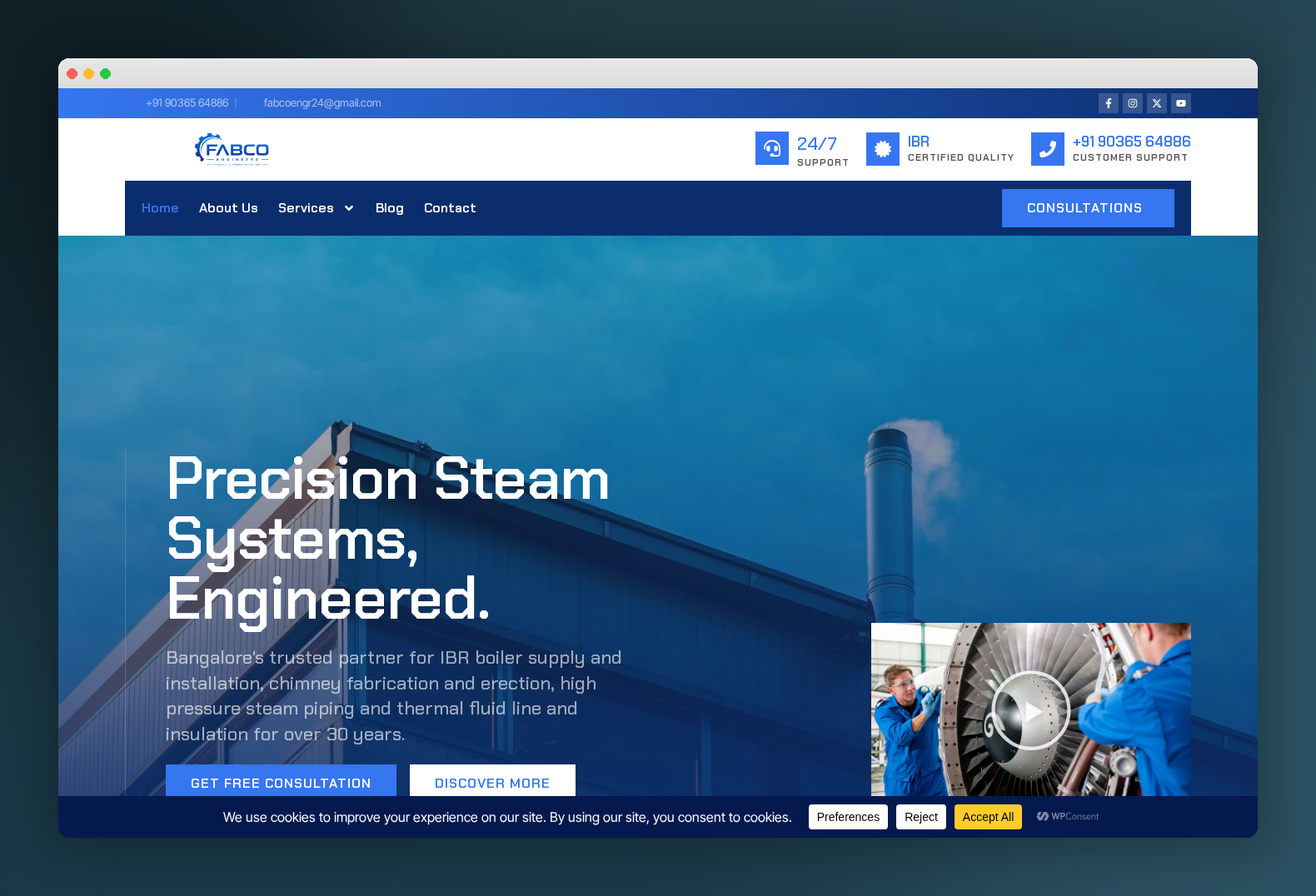
FABCO Engineers
Corporate site for an industrial engineering firm
Service architecture, enquiry funnel and technical SEO for a Bangalore boiler and fabrication specialist.
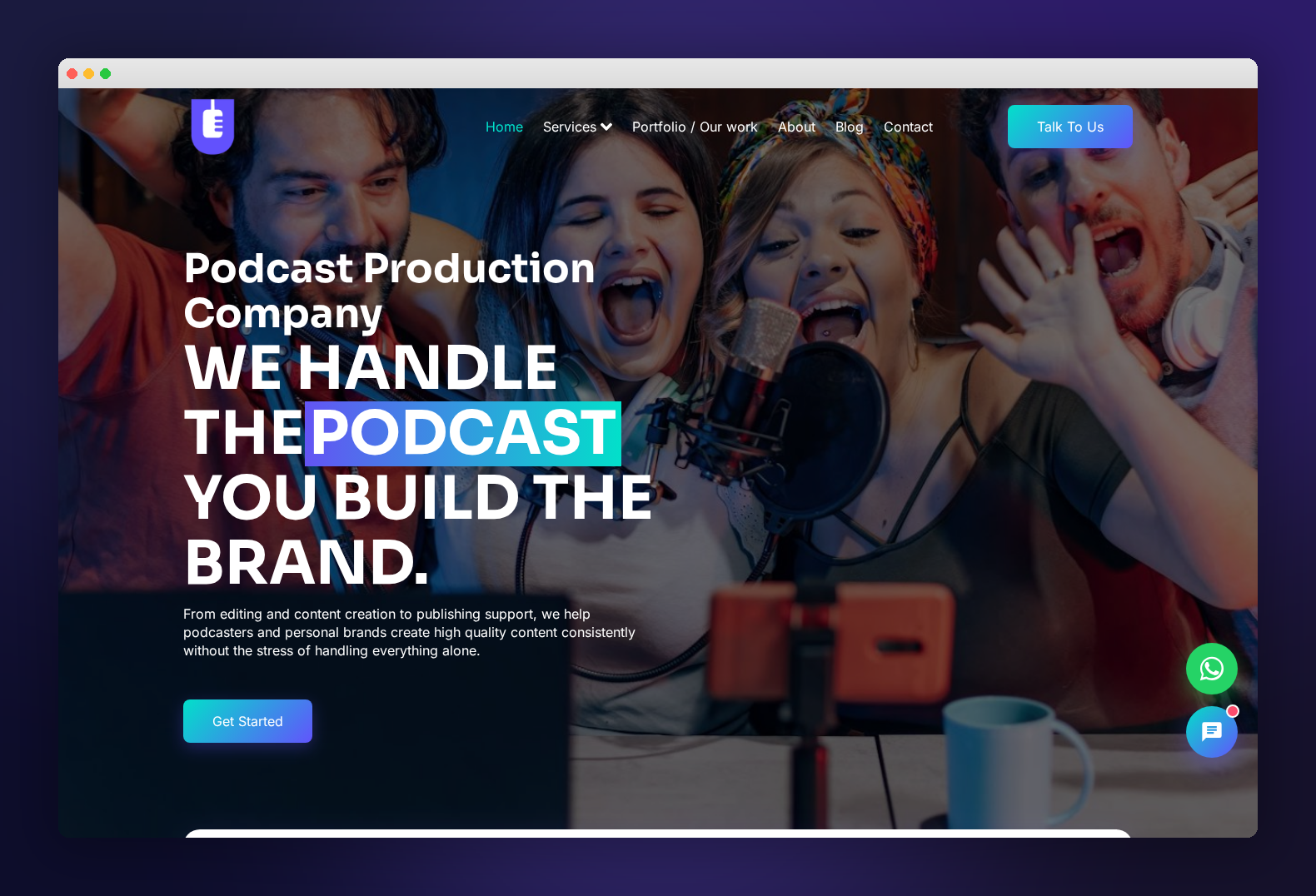
Usharo Media
Website for a podcast production studio
Positioning, portfolio structure and lead capture for a podcast and content production company.
Start with the map, not the tool
We begin by drawing your actual customer lifecycle: how people arrive, what they do next, where they stall, who follows up, and what happens when nobody does. Almost always there are three or four gaps where interested people quietly fall out, and closing those is worth more than a new campaign.
Only then do we talk about platforms. Klaviyo for ecommerce, HubSpot for B2B pipelines, Zoho or Brevo where budget and India specific needs point that way, or your existing stack if it can do the job. Migrating tools is expensive and rarely the actual problem, so we recommend staying put whenever the current platform can carry the plan.
Data comes next: clean lists, deduplicated records, consistent field names, meaningful segmentation and event tracking that fires reliably. Automation built on messy data does not misfire occasionally, it misfires at scale, and the customer notices before you do.
- Lifecycle mapping
- Every stage from first visit to repeat purchase, with the gaps marked and prioritised.
- Flow build
- Welcome, nurture, cart and browse recovery, post purchase, review requests, win back, renewal.
- CRM workflows
- Lead scoring, routing, task creation and sales alerts, so nothing depends on memory.
- Campaign calendar
- Broadcast planning, segmentation and a testing schedule that does not exhaust the list.
Flows that earn their place in the inbox
A welcome sequence should teach someone why you exist and what to do first, not shout a discount three times. A cart recovery series should acknowledge hesitation and answer it, delivery time, returns, sizing, payment options, before it reaches for a coupon. A win back should sound like a business that noticed, not a database that fired.
So we write the flows as copy, not as diagrams filled in later. Subject lines are tested in batches, send timing is set by when your particular audience actually opens, and frequency is capped so a customer in three segments does not receive three messages in one morning.
Deliverability is treated as infrastructure. Authentication records configured correctly, sending domains warmed, engagement based sending, and unengaged contacts sunset on a schedule rather than mailed forever. A list of forty thousand addresses where eight thousand read is worth far more than the other thirty two thousand combined.
Sales follow up, handled by the system
For businesses with a sales team, the highest return automation is usually the least glamorous: lead routing within minutes, automatic task creation, a reminder cadence the rep cannot forget, and a nurture track for the deals marked 'later' that would otherwise never be touched again.
We also build the reporting that makes those decisions visible, source to close, stage duration, drop off by rep and by segment. Once marketing and sales are reading the same numbers, arguments about lead quality tend to turn into agreements about lead definition, which is a much more productive conversation.
Where WhatsApp is the dominant channel, the same lifecycle logic runs there alongside email, sharing the same segments and suppression rules rather than operating as a separate silo.
Set up once, refined continuously
Automation is not a project that ends. Each month we review flow level performance, rewrite the steps that underperform, test new subject lines and offers, prune segments that stopped meaning anything, and add flows for situations the business did not have last quarter.
You keep everything. The flows, the copy, the documentation and the platform account are yours, and the handover pack explains how each piece works so an in house hire can take it over without an archaeology project.
Who this is for
Automation pays off when you already have a flow of leads or customers and the follow up depends on somebody remembering. If enquiries sit for days, if nobody knows which leads went quiet, or if your only email is a monthly newsletter, there is money sitting in the gap.
It suits businesses with a considered purchase cycle, repeat purchase potential, or a sales team whose time is better spent on warm conversations than on chasing. It also suits founders who are the bottleneck and know it.
It is premature if you have almost no list and no traffic. Automation multiplies an existing flow, it does not create one. In that case we would start with acquisition and build the lifecycle layer once there is something to nurture.
- Best fit
- Existing lead or customer flow, considered purchases, repeat buying, sales teams stretched thin.
- Weak fit
- No list and no traffic yet, where acquisition should come first.
The stack, and choosing it honestly
We work across the common platforms rather than reselling one. The right choice depends on your data, your team and your budget, and we would rather put you on something simple you will actually use than on an enterprise suite that becomes shelfware.
Whatever the platform, the foundations are the same: clean data with a defined source of truth, consistent field naming, deduplication rules, lifecycle stages everyone agrees on, and consent recorded properly.
We then build the journeys that matter first, usually enquiry follow up, onboarding, reactivation and post purchase. Each one is written as copy first, because a beautifully branched flow sending forgettable messages is still forgettable.
Measurement, maintenance and handover
Every journey ships with a measurement plan: what it is meant to change, how we will know, and when we will review it. Open rates are a diagnostic, not a goal. Replies, booked calls, revenue and time saved are the numbers we report.
Automation decays. Offers change, links break, integrations silently fail. We run a monthly health check across active flows and keep a documented map of what exists and why, so the system stays understandable when the person who commissioned it moves on.
Everything is built in your accounts and documented for handover. If you want to take it in house after six months, you should be able to, and the documentation is written with that outcome in mind.
What is included
Deliverables, spelled out.
Scope is agreed in writing before we start, so there is never a debate later about whether something was part of the engagement.
- 01Lifecycle audit and opportunity map
- 02Platform selection or optimisation of your current stack
- 03Data cleanup, segmentation and event tracking
- 04Core flow build with full copywriting
- 05CRM workflow, lead scoring and routing setup
- 06Deliverability and domain authentication
- 07Campaign calendar and testing programme
- 08Documentation, training and monthly optimisation
What makes DG5 different from a typical Marketing automation agency.
How our Marketing automation delivery model compares to two common alternatives businesses evaluate. Typical industry norms, not any specific competitor, so you can benchmark on capability and transparency rather than marketing claims.
Capability
DG5 Agency
Boutique agency
Large network agency
Strategy depth
DG5:End to end funnel strategy
Boutique:Strong in one niche
Network:Templated playbook
Team on your account
DG5:The strategist who scoped it stays on it
Boutique:Founder plus a small team
Network:Rotating account managers
Reporting
DG5:Live dashboard tied to leads and revenue
Boutique:Monthly call and deck
Network:PDF only
Scope
DG5:Web, SEO, ads and automation together
Boutique:One or two channels
Network:Separate channel silos
Turnaround
DG5:Weekly shipping cadence
Boutique:Fast but capacity limited
Network:Queued behind bigger retainers
When something fails
DG5:Flagged with the reason and the fix
Boutique:Depends on the founder
Network:Quietly dropped from the report
Contract
DG5:Flexible terms, earned monthly
Boutique:Flexible but informal
Network:Long lock ins
This comparison reflects our own delivery model and common evaluation criteria clients use when comparing agencies in Bangalore, not a claim about any specific competitor.
What clients say about working with us.

"DG5 rebuilt our site and aligned our SEO and paid lead generation around the product categories that actually drive enquiries. The leads that come in now already understand what we do before the first call."
"The travel content and video work DG5 produces feels like our own voice, just louder. Their reels and campaign posters have directly filled departure slots we would otherwise have struggled to close."

"DG5 runs our social channels, paid campaigns and website updates as one rhythm. The best part is the reporting: we know which post, which ad and which landing page moved the needle."
How the work runs.
Map
Chart the real lifecycle, find where interested people fall out, and rank the gaps by revenue at stake.
Build
Clean the data, write the copy, build and test the flows, connect CRM routing and reporting.
Refine
Monthly review of flow performance, rewriting the weak steps and adding new journeys as the business changes.
What clients ask before signing.
Which platform do you recommend?
+
Klaviyo for ecommerce, HubSpot for B2B pipelines with a sales team, Zoho or Brevo where cost and local support matter most. If your current platform can do the job, we would rather build on it than sell you a migration.
How much revenue should automation produce?
+
For established ecommerce brands, well built flows commonly account for a meaningful double digit share of total revenue. For B2B the effect shows up as shorter sales cycles and higher conversion from existing pipeline rather than direct attributed sales.
Will you write the emails or do we?
+
We write them. Copy is the part that decides whether a flow works, so it is included rather than left as homework. You review and approve everything before it goes live.
What if our contact data is a mess?
+
That is normal and it is the first phase of the work. Deduplication, field standardisation, consent status and re engagement of the salvageable part of the list all happen before a single new flow is switched on.
Which platform do you recommend?
+
It depends on your data volume, your team and your budget. We recommend after a short discovery rather than defaulting to one tool, and we are not resellers for any platform.
Can you fix the automation we already have?
+
Yes. A lot of our work is auditing existing setups, removing duplicate or conflicting flows, repairing tracking and rewriting the messages that are quietly doing nothing.
How long until it is live?
+
A core follow up journey can be live in two to three weeks. A full lifecycle programme is usually built out over a quarter, shipping one journey at a time.
Related services
SEO
SEO that earns qualified traffic: technical audits, keyword and intent mapping, on page work, local search and content that answers real buying questions. Bangalore based, working across India.
Ecommerce development
Online stores built to sell: Shopify, WooCommerce and custom stacks tuned for page speed, catalogue clarity, checkout completion and repeat purchase.
WhatsApp & SMS chatbots
Conversational systems on WhatsApp and SMS that qualify leads, answer real questions, recover carts and send order updates, built on the official Business API.
This month only
Start marketing automation. Get 1 month of social media management free.
Content, posting and reporting for your channels, run by our social team at no cost for the first month of any engagement.
Tell us what you are trying to grow.
Send us the context, the product, the market, what has already been tried. You will get a straight answer about whether we can help and what it would take, usually within one working day.
+91 78999 13338 · hello@dg5agency.com